Should I Feed My Dog or Cat a Raw or Home-Cooked Diet?
PawMD
September 23, 2026
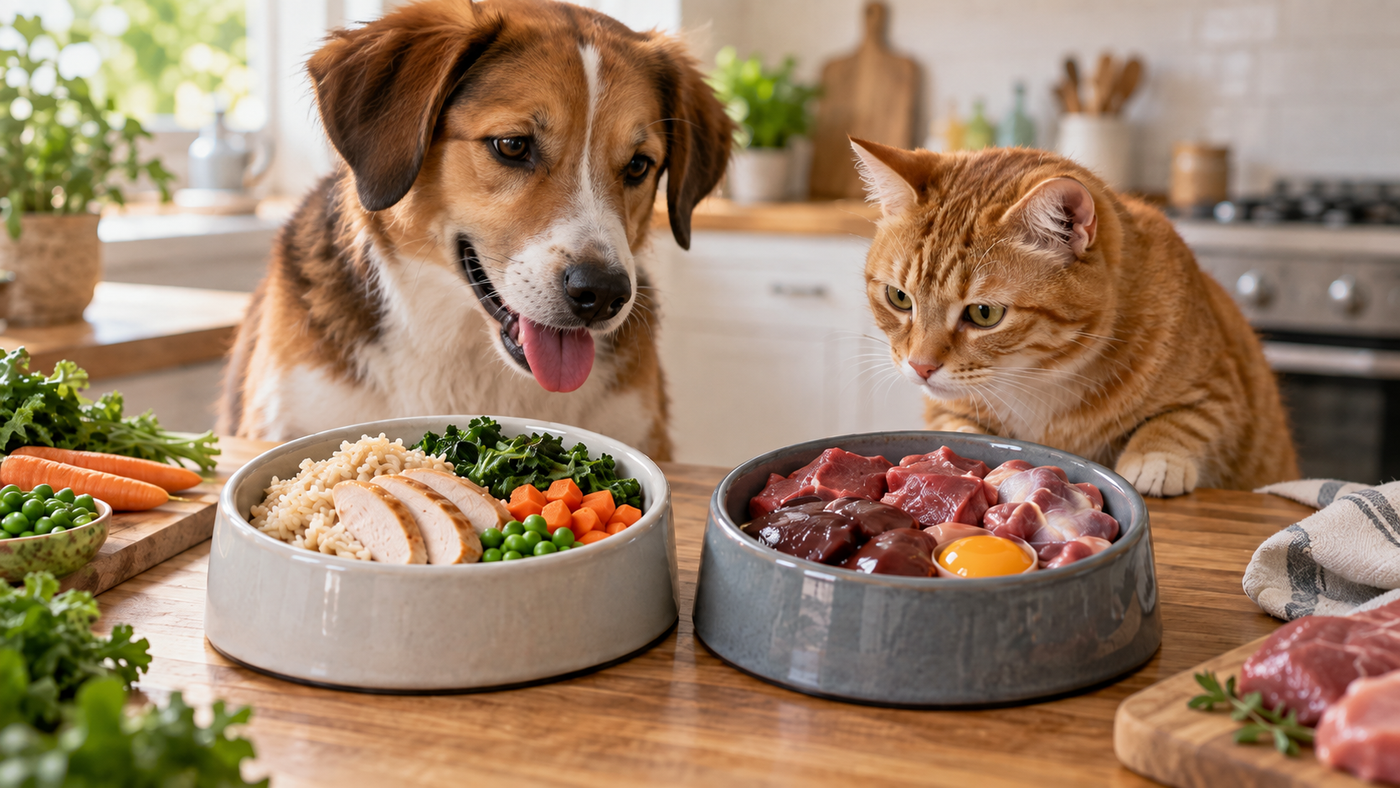
Maybe you look at your pet’s kibble and think:
“Wouldn’t real, fresh food be better?”
Chicken you cooked yourself. Fresh vegetables. Eggs. Fish. Organ meat. Ingredients you actually recognize. Or maybe you have seen dogs and cats eating raw meat and wondered whether a more natural, meat-focused diet would be healthier.
There are legitimate reasons pet parents are attracted to both home-cooked and raw diets. There are also important risks. The real question is not whether homemade food is automatically better or raw food is automatically bad.
It is:
Can this diet safely give your individual pet everything they need?
Home-Cooked and Raw Are Not the Same Thing
A home-cooked diet uses ingredients that you prepare and cook before feeding. A raw diet contains uncooked animal ingredients such as meat, poultry, organs, eggs, or bones.
Both can be nutritionally complete when properly formulated. Both can also become nutritionally unbalanced if they are put together without careful planning.
The major difference is that raw diets introduce an additional concern: bacteria and other pathogens that cooking normally helps destroy.
Why Pet Parents Choose Home-Cooked Food
There are several legitimate advantages to preparing your pet’s food yourself.
You Control the Ingredients
You choose the meat, vegetables, carbohydrates, oils, supplements, and other ingredients that go into the bowl.
For owners who care about ingredient sourcing, food sensitivities, or simply knowing exactly what their pet is eating, that level of control can be valuable.
It Can Be Highly Customized
A properly formulated home-cooked diet can account for your pet’s:
- Age
- Weight
- Activity level
- Calorie needs
- Medical conditions
- Ingredient restrictions
- Food preferences
- Life stage
A young active Labrador and a senior Chihuahua with kidney disease should not necessarily be eating the same diet.
This is one area where a professionally formulated home-prepared diet can be particularly useful.
Fresh Food Can Be Very Appealing
Many dogs and cats love freshly prepared meat, fish, eggs, and other foods.
Home-cooked meals can also contain considerably more moisture than dry kibble, which may be especially appealing for cats or pets that do not drink much water.
And importantly, you can get many of the qualities people like about raw feeding without actually feeding raw meat.
Fresh does not have to mean raw.
The Biggest Mistake With Homemade Food
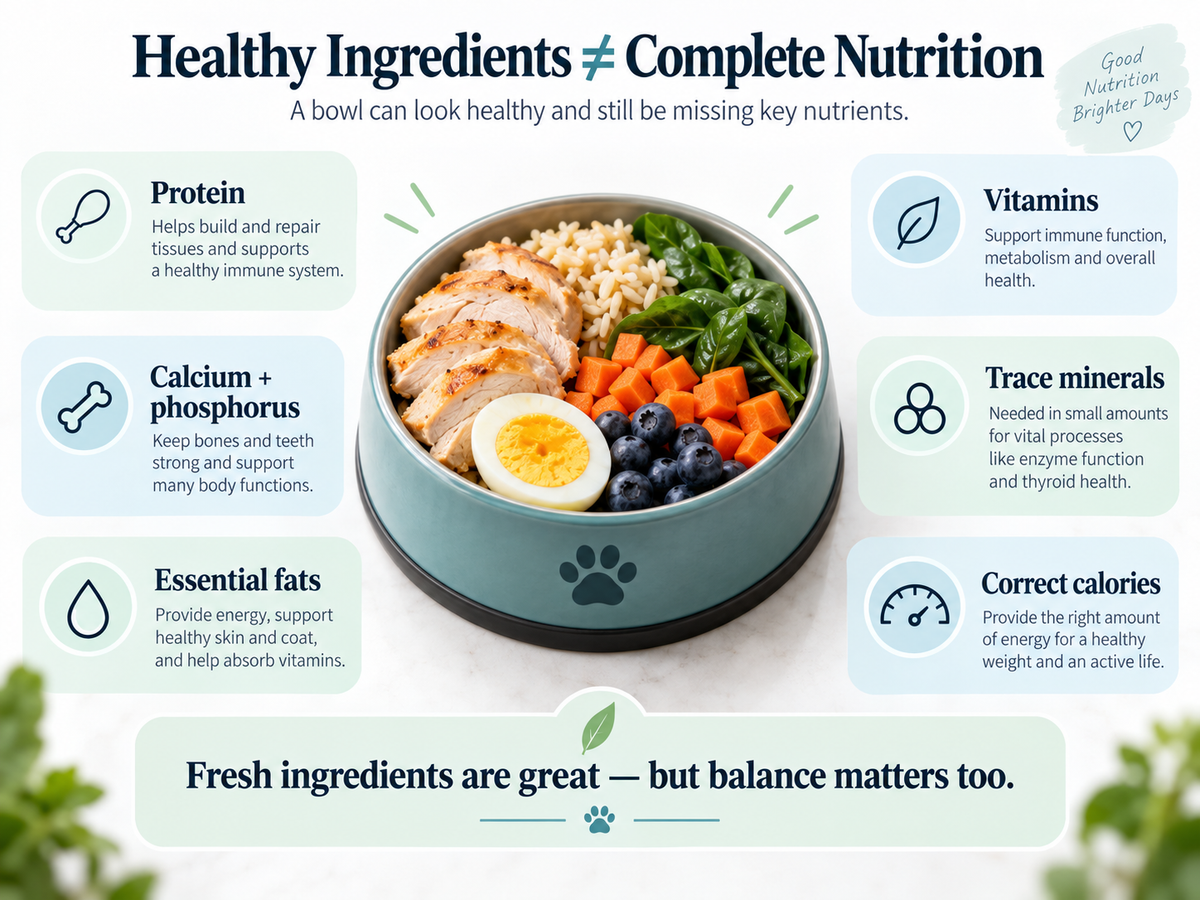
A bowl can look healthy without actually being nutritionally complete. Chicken, rice, carrots, blueberries, spinach, and an egg might look like an excellent meal.
But dogs and cats need the correct amounts and proportions of protein, essential amino acids, fats, calcium, phosphorus, vitamins, minerals, and calories. A diet can contain excellent ingredients and still be missing something important.
Those deficiencies may not become obvious immediately. Problems can develop gradually over months. Growing puppies and kittens are especially vulnerable because mistakes involving calories, calcium, phosphorus, and other nutrients can interfere with normal development. Adding a random multivitamin does not necessarily fix the problem either.
Nutrition depends on both the nutrients themselves and the amounts and ratios in which they are provided.
If You Want to Cook for Your Pet
The safest approach is to use a recipe formulated specifically for your pet by a qualified veterinary nutrition professional.
Then follow the recipe closely.
Changing the protein, leaving out a supplement, altering the amount of oil, or regularly substituting ingredients can change the nutritional balance.
What About Raw Diets?
Raw feeding is more controversial, but there are understandable reasons pet parents choose it.
Potential Benefits of Raw Diets
Raw diets are often:
- Highly palatable
- High in moisture
- Meat-focused
- Made with relatively simple ingredients
- Highly digestible depending on formulation
- Easy for owners to customize when preparing them themselves
Some owners report that their pets have shinier coats, smaller stools, better appetite, less gas, improved digestion, or less itching after switching to a raw diet.
Those experiences should not simply be dismissed.
However, they do not necessarily prove that the food being raw caused the improvement. The new diet may contain a different protein, more fat, more moisture, different ingredients, or simply be better suited to that individual pet. A raw diet can also be nutritionally complete when properly formulated.
Nutritional balance and food safety are two separate questions.
The Main Concern With Raw Food: Pathogens
Raw animal products can carry disease-causing organisms such as:
- Salmonella
- Listeria
- E. coli
- Other harmful bacteria
These organisms can potentially affect both pets and people.
Your pet also does not necessarily have to appear sick for bacteria to spread around the household. Contamination can occur through food bowls, countertops, hands, feces, or even a pet licking someone after eating.
This risk matters even more in households with young children, pregnant people, older adults, or people with weakened immune systems. Freezing does not completely eliminate the concern. Frozen, freeze-dried, and dehydrated raw animal products can still contain harmful organisms.
What About Bird Flu?
Raw poultry and other uncooked animal products have gained additional attention because of highly pathogenic avian influenza, including H5N1.
Cats in particular can become seriously ill from H5N1, and investigations have linked some infections to exposure to contaminated raw animal products.
This does not mean every package of raw food contains bird flu. It does mean that raw animal products can potentially carry pathogens beyond the bacteria traditionally associated with raw meat.
Are Commercial Raw Diets Safer?
Some manufacturers use additional food-safety controls, such as high-pressure processing and pathogen testing.
If you are considering a commercial raw food, ask the manufacturer:
- Is the diet complete and balanced for my pet’s life stage?
- Do you test finished food for pathogens?
- What steps are used to reduce harmful bacteria?
- Who formulates the diet?
- Does the company work with qualified veterinary nutrition experts?
A professionally formulated commercial raw diet may be nutritionally complete, but that does not completely remove the microbial risks associated with uncooked animal ingredients.
What About Raw Bones?
Pet parents sometimes use raw bones for chewing and enrichment. Bones may help mechanically scrape material from teeth and can satisfy natural chewing behavior.
However, they also carry risks including:
- Broken teeth
- Mouth injuries
- Choking
- Constipation
- Esophageal obstruction
- Intestinal obstruction or injury
Raw bones are not required for a healthy diet, and there are other ways to provide chewing enrichment and dental care.
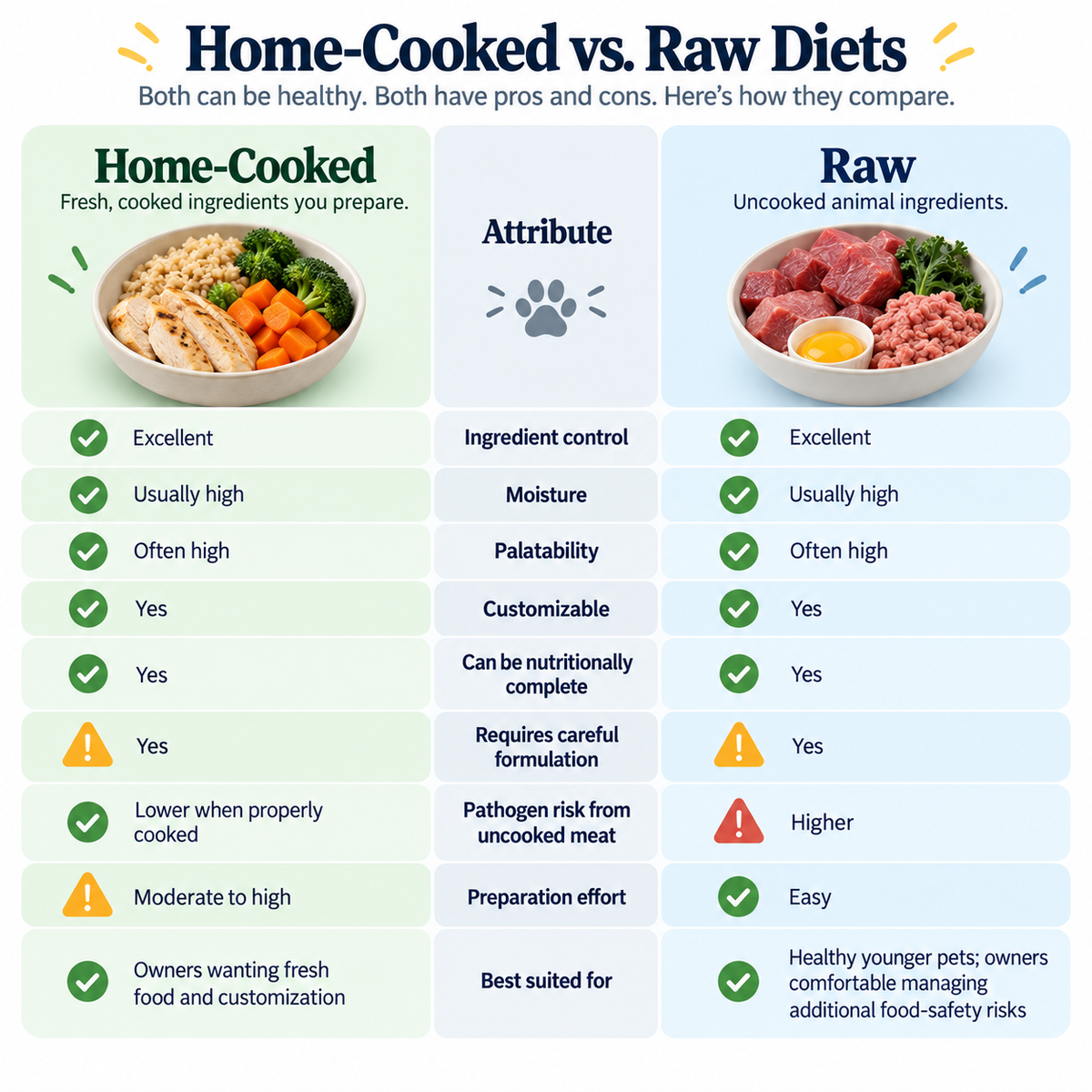
Home-Cooked vs. Raw
If You Choose to Feed Raw
If you decide raw feeding is right for your household, food handling becomes especially important.
Choose a reputable manufacturer and look for a diet that is complete and balanced for your pet’s life stage.
Wash your hands after handling raw food. Clean bowls and preparation surfaces thoroughly. Thaw frozen food in the refrigerator rather than on the counter. Keep raw pet food away from human food.
It is also important to tell your veterinarian that your pet eats a raw diet.
You Have More Options Than Kibble or Raw
Pet nutrition does not have to be an either-or decision.
Other options include:
- Canned diets
- Commercial fresh cooked diets
- Veterinary therapeutic diets
- Professionally formulated home-cooked diets
- Mixed feeding approaches
For many pet parents, a properly formulated fresh cooked diet offers much of what attracts them to raw feeding:
- Fresh ingredients.
- High moisture.
- Ingredient control.
- Excellent palatability.
But without intentionally feeding uncooked animal proteins.
How Do You Know Whether a Diet Is Actually Good?
Do not judge a pet food only by whether the ingredients sound healthy.
Ask:
Is it complete and balanced for my pet’s life stage?
Who formulated it?
What quality-control procedures are used?
Is my pet maintaining a healthy weight and body condition?
Does my pet have medical conditions that affect nutrition?
If the diet is homemade, was the recipe professionally formulated?
If it is raw, how does the manufacturer reduce and test for pathogens?
A beautiful bowl of meat and vegetables can still be nutritionally incomplete. And a less visually impressive food may have years of nutritional research behind it. You cannot determine nutritional quality just by looking at the bowl.
The Bottom Line
Home-cooked and raw diets are not automatically good or bad. Both can use excellent ingredients. Both can provide high moisture. Both can be highly palatable. And both can be nutritionally complete when properly formulated.
The important difference is that raw food introduces additional food-safety concerns because the animal ingredients have not been cooked. If you want to prepare fresh food for your pet, you do not have to abandon the idea. Just make sure you are feeding based on nutrition, not simply ingredients.
The best diet is the one that safely provides the nutrition your individual pet needs and that you can prepare and feed correctly and consistently.
Dogs · Cats · Nutrition · Infectious Disease · Parasites · Weight
Related articles
- Why Is My Dog or Cat So Itchy? The 3 Big Allergy Triggers
Symptoms & Health Conditions
- Vomiting or Diarrhea in Dogs and Cats: What to Do and When to Worry
First Aid & Emergencies
This article is for general information and is not a substitute for veterinary advice. Contact a veterinarian if your pet is in distress or you are unsure what to do next.