Halloween Pet Safety: Candy, Costumes, and Door Dashers
PawMD
October 20, 2026
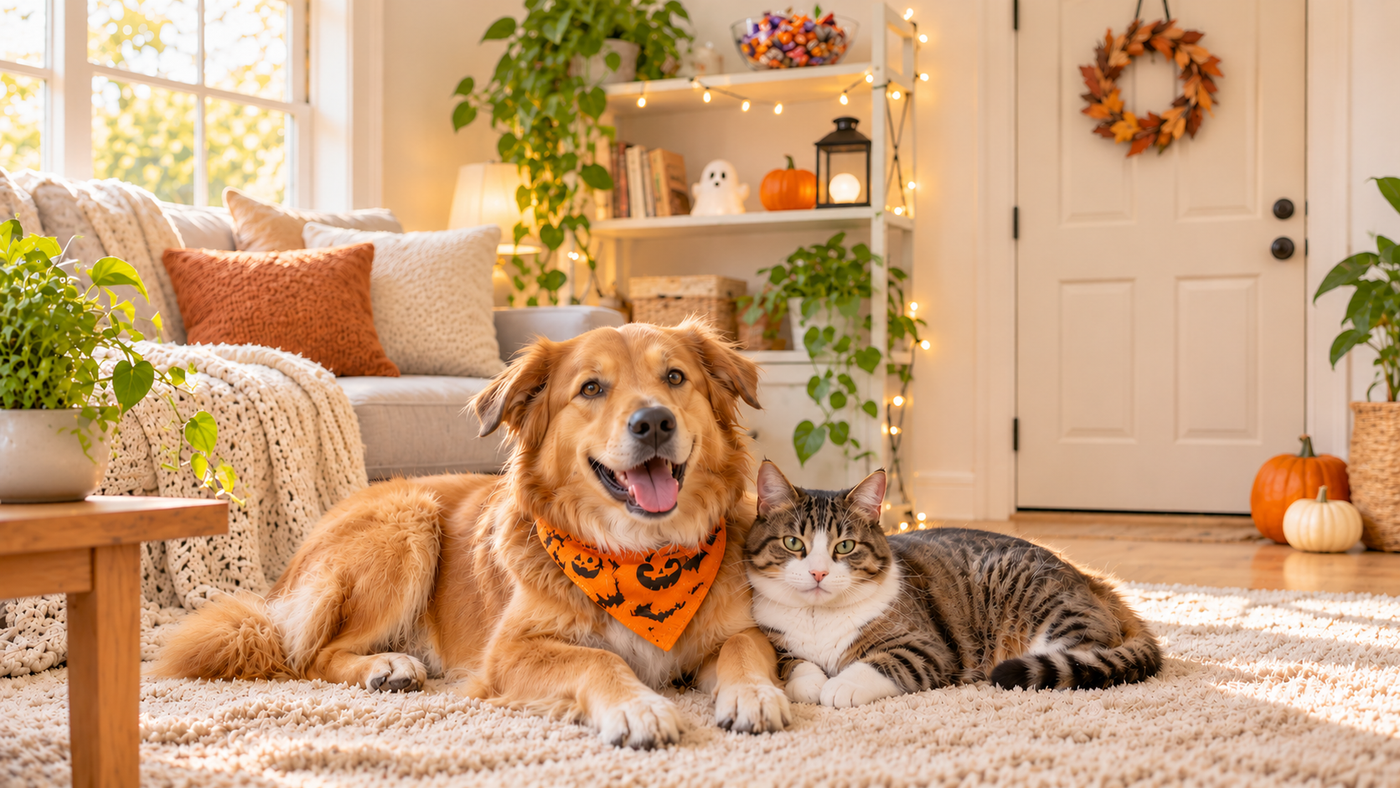
The doorbell has rung for the fortieth time, there's a pillowcase of candy slumped by the couch, and your dog is wearing a hot dog costume with an expression of quiet betrayal.
Halloween is a lot of fun for people and a lot to handle for pets. The biggest risks are pretty predictable: dogs getting into candy (especially chocolate and sugar-free treats with xylitol), pets slipping out the front door while trick-or-treaters come and go, and costumes or decorations that frighten, tangle, or get chewed. The good news is that a little planning prevents most of it. And if your pet eats something they shouldn't, call your veterinarian or an emergency vet, and use ToxCheck, PawMD's toxicity calculator, to check whether the amount your pet ate is likely a concern for their size and get the details together for next steps.
Here's how to keep the night fun for everyone, including the one in the hot dog costume.
Why is Halloween so hard on pets?
From your pet's point of view, Halloween is a strange evening. The doorbell rings over and over, strangers in masks keep appearing on the porch, kids are shrieking happily, and there's an unusual amount of food at nose height.
Halloween is probably the second-scariest holiday of the year for pets, behind only the Fourth of July. All that noise and activity can be especially hard on pets who already have anxiety, heart conditions, seizures, or sensitive stomachs. If your pet falls into one of those groups and you have big plans, talk with your veterinarian well before the holiday, not on the night itself.
What Halloween candy is dangerous for dogs?
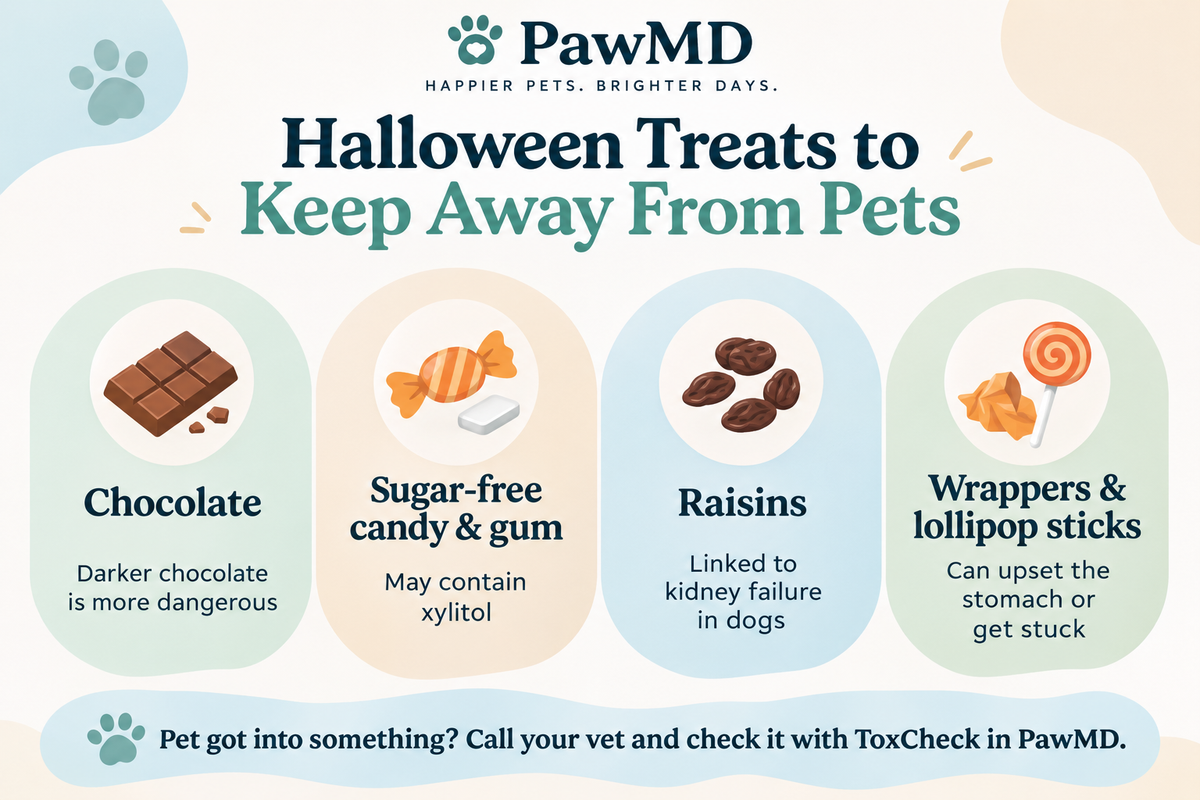
Candy is the big one. Cats usually aren't very interested, but dogs can eat a surprising amount very quickly, wrappers and all, and veterinary emergency rooms see more toxicity cases around Halloween, especially involving chocolate.
Chocolate contains theobromine and caffeine, stimulants that dogs process slowly. Darker chocolate and baking chocolate are generally more concerning than milk chocolate, and smaller dogs are at greater risk from a given amount. Signs can take hours to appear, so a dog who looks fine right now still deserves a phone call. We walk through it step by step in My Dog Ate Chocolate: What Do I Do?
Sugar-free candy and gum can be even more dangerous. Many contain xylitol, a sugar substitute that's also sold as "birch sugar." Xylitol can cause a dog's blood sugar to drop sharply, leading to vomiting, weakness, wobbliness, collapse, or seizures. Signs often start within about 30 minutes but can be delayed for hours, and larger amounts can damage the liver. It doesn't take much, especially for a small dog. If you think your dog ate anything sugar-free, treat it as urgent.
Raisins sometimes turn up in trick-or-treat bags, either in snack boxes or covered in chocolate. Grapes and raisins have been linked to kidney failure in dogs, so any raisin-containing treat is worth a call.
Even plain candy can cause trouble. A dog who eats a pile of sweets will often end up with vomiting and diarrhea, and wrappers, lollipop sticks, and foil can upset the stomach or get stuck along the way.
A few habits help a lot. Keep candy bowls and trick-or-treat bags well out of reach, gently remind kids that candy isn't for sharing with the dog (even though it's sweet of them to offer), and make sure wrappers go straight into a trash can with a lid.
Are there other Halloween hazards hiding in the house?
Halloween parties bring guests, and guests bring bags, coats, and pockets full of things that aren't safe for pets.
Vapes and e-cigarette refills are a real concern. Nicotine is very toxic to dogs and cats, and a refill bottle can hold far more nicotine than a single cartridge, so a chewed-up vape or a spilled bottle deserves an immediate call.
Cannabis edibles are another one. Brownies, gummies, and chocolates made with THC look and smell like any other treat to a dog. Common signs in dogs include trouble walking or standing, being unusually sensitive to sound or touch, lethargy, and dribbling urine. If there's any chance your pet got into an edible, tell your veterinarian honestly. They're there to help your pet, not to judge, and knowing what was eaten helps them choose the right care.
Ask guests to keep bags and coats in a closed room, and do a quick sweep of the floor and low tables before you head to bed.
How do I keep my pet from bolting out the door?

This may be the most underrated Halloween risk. With the door opening every few minutes and strangers in costumes on the step, a nervous or excited pet can slip out in a second, and the night is dark, busy, and full of cars.
For many pets, the safest place on Halloween night is a quiet, closed room away from the front door, with their bed, water, a favorite toy, and maybe some music or a TV on to soften the doorbell. Crate-trained dogs may be happiest in their crate. Outdoor cats are safest kept indoors for the night.
If your pet gets very anxious around noise and visitors, ask your veterinarian ahead of time whether anything might help for the evening. Again, that's a conversation for the week before, not the night of.
Is my pet's microchip and ID up to date?
Halloween is a good reminder to check. Make sure your pet is wearing a collar with a current ID tag, and if they're microchipped, confirm that your contact information with the chip registry is current, especially if you've moved or changed phone numbers.
A microchip doesn't track your pet's location. It holds an ID number that links to your contact details in a registry, so it only helps bring your pet home if those details are right.
Should my pet wear a costume?
Some pets genuinely don't mind dressing up. Plenty of others find it stressful, especially on a night that's already a lot. If your pet tolerates a costume, a few things make it safer:
- It should fit comfortably, with no tight elastic and nothing pulling on fur
- It shouldn't block their vision, hearing, breathing, or ability to move, sit, and go to the bathroom
- Avoid dangling pieces they can trip on, snag a nail in, or chew off and swallow
- Never use paint or dye directly on your pet's fur
- Stay with them the whole time they're wearing it
If your pet freezes, hides, scratches at the costume, or keeps trying to get out of it, that's your answer. A festive bandana is a perfectly good costume.
Can I take my dog trick-or-treating?
If your dog is calm, friendly, and comfortable with crowds, a short outing can be fun. Use a secure leash and harness, add reflective gear or a light, and keep some distance from other dogs and excited kids.
Keep in mind that costumes and masks can make familiar shapes look strange to a dog, and a frightened or overwhelmed dog may react by bolting or even biting. If your gut tells you your dog won't enjoy it, trust that. A quiet evening at home with a good chew is a fine way to celebrate.
What about pumpkins, candles, and decorations?
Jack-o'-lanterns and candles are easy for a wagging tail to knock over or a curious nose to get too close to. Battery-operated candles give the same glow without the risk.
Fake cobwebs, small plastic decorations, and other trinkets can become choking or swallowing hazards for pets who like to chew. Strobe lights and loud animated decorations can also frighten some pets, so keep them away from the areas where your pet spends time.
What should I do if my pet ate candy or something toxic?
Stay calm and move quickly. Get any remaining candy or wrappers away from your pet, and try to figure out what they ate, how much, and when. If you still have the wrapper, keep it, since the ingredient list is very useful. Then call your veterinarian or the nearest emergency veterinary hospital. If you can't reach either, an animal poison-control service can help:
- ASPCA Animal Poison Control Center: (888) 426-4435
- Pet Poison Helpline: (855) 764-7661
These services may charge a consultation fee. Don't try to make your pet vomit unless a veterinarian or poison expert tells you to.
Go straight to an emergency veterinary hospital if your pet is vomiting repeatedly, seems very weak or wobbly, is trembling, has a seizure, collapses, or has a racing heart.
How can PawMD help on a busy night?
When something goes wrong, details like your pet's weight, medications, and health history can suddenly be hard to remember. The PawMD app keeps your pet's profile and records vault in one place. ToxCheck, PawMD's toxicity calculator, estimates whether the amount your pet ate is likely a concern for their size. It's not a diagnosis, so use it alongside a call to your veterinarian. If something might be toxic, call a veterinarian or poison control.
If you're unsure and want to talk it through, PawMD also connects you with licensed veterinarians by chat, phone, or video. And if your clinic uses Vetly, you can message your own clinic's team from the app, and they'll see the same record you do.
Frequently Asked Questions
What should I do if my dog ate Halloween candy?
Find out what kind and how much, keep the wrappers, and call your veterinarian or a pet poison hotline. Chocolate, sugar-free candy with xylitol, and anything with raisins are the most concerning, and signs can be delayed, so don't wait for your dog to look sick.
Is sugar-free candy dangerous for dogs?
It can be very dangerous. Many sugar-free candies and gums contain xylitol, which can cause a sudden drop in blood sugar and, in larger amounts, liver damage. Even a small amount can matter for a small dog, so call right away.
Can cats eat Halloween candy?
Cats usually aren't interested in candy, but they're sensitive to the same toxins as dogs. If your cat ate chocolate or anything sugar-free, call your veterinarian or a poison hotline.
Is it okay to put a costume on my dog or cat?
It can be, if your pet is relaxed in it, it fits comfortably, and it doesn't block their vision or movement. Supervise them the whole time. If they seem stressed, take it off.
How do I keep my dog calm on Halloween night?
Set up a quiet room away from the front door with their bed, water, and a favorite toy, and play some background noise to soften the doorbell. If your dog has a hard time with noise and visitors, talk to your veterinarian about it well before Halloween.
What if my pet gets out during trick-or-treating?
Start searching right away and call local shelters and animal control. A collar with a current ID tag and a microchip registered with your up-to-date contact information give your pet the best chance of coming home.
Are Halloween candles and decorations dangerous for pets?
Candles and jack-o'-lanterns are a fire and burn risk around curious pets, so battery-operated lights are a safer choice. Small decorations and fake cobwebs can be chewed or swallowed, so keep them out of reach.
The Bottom Line
Halloween is meant to be fun, and with a little planning it can be for your pet too.
Keep the candy up high and the wrappers in a closed trash can, give your pet a quiet room away from the door, check their ID tag and microchip details, and let costumes be optional. If your pet gets into something they shouldn't, call your veterinarian or a pet poison hotline right away instead of waiting for symptoms.
The best Halloween for a pet is usually the boring one: safe at home, a little puzzled by the doorbell, and nowhere near the candy bowl.
Related reading: My Dog Ate Chocolate: What Do I Do? · Vomiting or Diarrhea in Dogs and Cats: What to Do and When to Worry
Sources:
Halloween · Holidays · Toxins · Chocolate · Emergency · Lost Pet
Related articles
- What Are the Winter Holiday Hazards for Pets?
First Aid & Emergencies
- My Dog Swallowed a Sock or Toy: What Do I Do?
First Aid & Emergencies
- When to Take Your Pet to the Emergency Vet
First Aid & Emergencies
This article is for general information and is not a substitute for veterinary advice. Contact a veterinarian if your pet is in distress or you are unsure what to do next.