My Dog Swallowed a Sock or Toy: What Do I Do?
PawMD
November 3, 2026
You reach for a sock in the laundry basket and come up one short. Or you hear a suspicious gulp during playtime, and the squeaker toy is suddenly gone.
If your dog swallowed a sock, toy, or another object that shouldn't be in a stomach, call your veterinarian now, even if they seem completely fine. Socks, toys, bones, corn cobs, rocks, and pieces of clothing can lodge in the stomach or intestines and cause a blockage. Some small, smooth objects do pass, but you can't tell which way this will go from across the living room. Don't try to make your dog vomit unless a veterinarian tells you to.
A blockage is an emergency. The sooner a veterinarian can examine your dog, the more options they usually have.
What happens if a dog swallows a sock or toy?
When a dog swallows something that can't be digested, one of three things generally happens. The object may pass through the digestive tract on its own. It may sit in the stomach, where a veterinarian might be able to retrieve it with a camera or, if needed, surgery. Or it may move into the intestines and get stuck.
A stuck object is called a gastrointestinal foreign body, or a blockage. Food, water, and gas can't move through normally. The intestine can become swollen, lose blood supply, or, in serious cases, tear. That can lead to a dangerous infection in the abdomen. String, ribbon, yarn, and dental floss are especially worrying because they can saw at the intestine as it moves and cause holes. These are called linear foreign bodies. They're more often a cat problem, but dogs swallow them too.
What happens next depends on what was swallowed, where it is, how completely it blocks the tract, and how long it has been there. That's why "we'll wait and see if it comes out" is a decision a veterinarian should help you make, not one to make at home.
What are the signs of a blockage in dogs?
Signs can vary, and they don't always start right away. A dog may look normal for a little while and then become quite sick.
Common signs include:
- Vomiting, sometimes again and again
- Loss of appetite
- Abdominal pain or a hunched, uncomfortable posture
- Lethargy or weakness
- Diarrhea, with or without blood
- Signs of dehydration, such as sticky gums, unusual tiredness, or sunken-looking eyes
Some dogs strain or produce little to no stool. Others keep trying to vomit and bring up little or nothing. Repeated unproductive retching with a swollen, hard belly can also be a sign of bloat, which is its own emergency. If you see that, go to an emergency clinic right away; see When to Take Your Pet to the Emergency Vet.
If your dog is vomiting or has diarrhea after swallowing something, Vomiting or Diarrhea in Dogs and Cats: What to Do and When to Worry walks through those signs in more detail. A possible blockage is not a "monitor at home" situation. Call your veterinarian.
None of these signs, on their own, proves there is a blockage. Other illnesses can look similar. A veterinarian will put the history, the exam, and often imaging together and decide what's going on.
What should I do right now?
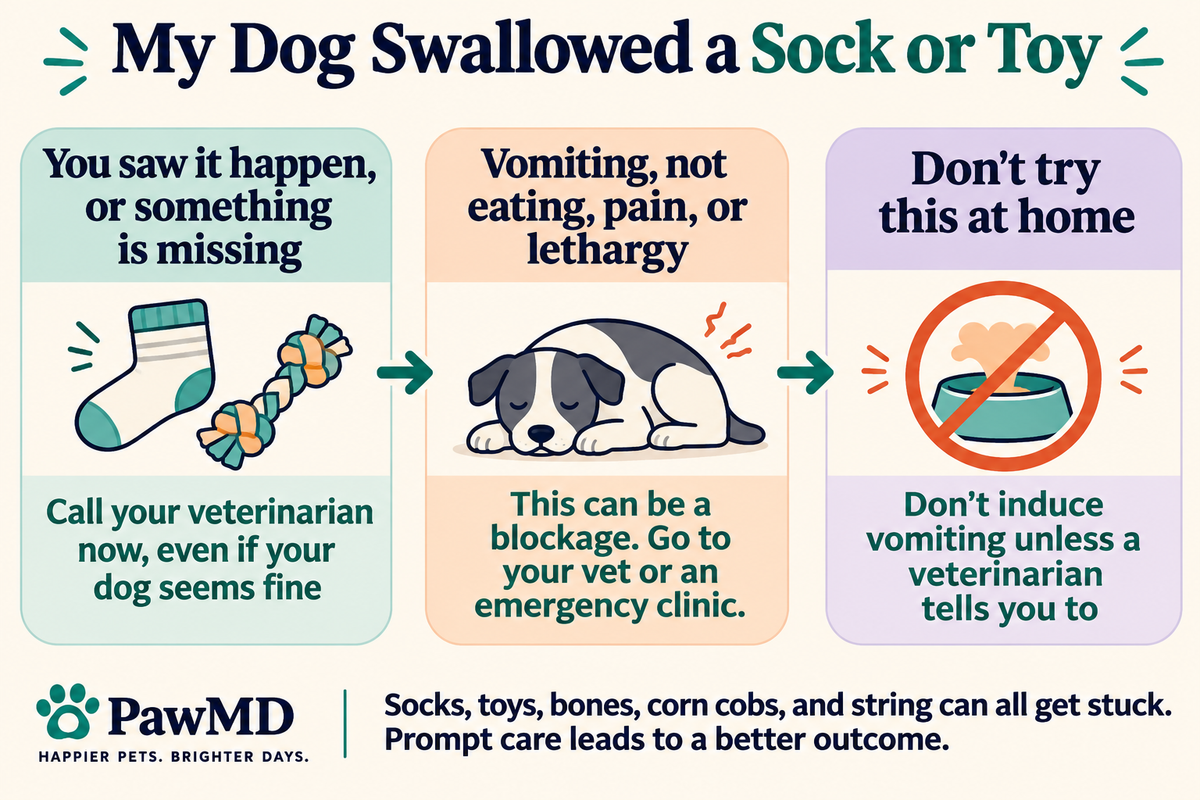
Take a breath. Then get a little information together and pick up the phone.
If you saw it happen, or something is missing
Call your veterinarian or the nearest emergency veterinary hospital and tell them what you think was swallowed, about how large it was, and when. Mention if other objects, socks, or toys are missing. If you still have a matching item, that's helpful too, so they can picture the size and shape.
Don't wait for vomiting to start before you call. Some objects are better retrieved early, while they're still in the stomach.
Don't induce vomiting at home
It's tempting to try to get the sock or toy back up. Please don't, unless a veterinarian specifically tells you to and explains how.
Some objects are sharp, large, or awkward enough that bringing them back up can cause more injury. Others may already be past the point where vomiting would help. Home methods can also harm your dog. Leave that decision to a professional.
Don't give human medications
Don't give ibuprofen, Pepto-Bismol, or any other human medicine for the upset stomach. Those can be dangerous on their own; see Which Human Medications Are Poisonous to Pets?.
If you see string or ribbon
If you notice string, thread, or ribbon at the mouth or coming from the rear, call your veterinarian right away and tell them. Linear foreign bodies can do more damage than a single sock, and they need prompt care. Cats are especially prone to swallowing tinsel, ribbon, and yarn; see What Are the Winter Holiday Hazards for Pets?.
When is it an emergency?
Go to your veterinarian or an emergency clinic now if your dog:
- Swallowed a sock, toy, bone, corn cob, rock, or other object, even if they still seem all right
- Is vomiting repeatedly, or trying to vomit with little coming up
- Has a swollen, hard, or painful abdomen
- Won't eat, seems weak or collapsed, or is in obvious pain
- Has blood in the vomit or stool
- Is having trouble breathing
- May have swallowed string, ribbon, or another long, thin object
When in doubt, go. A blockage can get worse over hours, and waiting can turn a simpler retrieval into a more complicated surgery.
What might the veterinarian do?
Your veterinarian will start with your dog's history and a physical exam, and they will often recommend bloodwork to check for dehydration, electrolyte changes, or other problems.
Imaging is a big part of the next step. X-rays can show some objects and signs of obstruction. Ultrasound can help when the object doesn't show up clearly on an X-ray. In some cases, a veterinarian may take more than one set of images over time to see whether a small, smooth object is moving.
Treatment depends on what they find:
- Some small, smooth objects may pass with hospitalization, fluids, and close monitoring.
- An object still in the stomach can sometimes be retrieved with an endoscope, a long, flexible camera passed through the mouth while your dog is under anesthesia.
- Many blockages require surgery to open the stomach or intestine and remove the object. If a section of intestine is badly damaged, the veterinarian may need to remove that piece and reconnect the healthy ends.
After surgery, dogs are typically monitored closely, often including the first few days at home, because complications can still occur as the intestine heals. Your veterinarian will tell you what to watch for and how to feed during recovery.
Dogs who are treated promptly often do well. The outlook is more guarded when the blockage has been present longer, the intestine is badly damaged, or infection has already started. That is the reason to call early, not to panic.
How can I keep this from happening again?
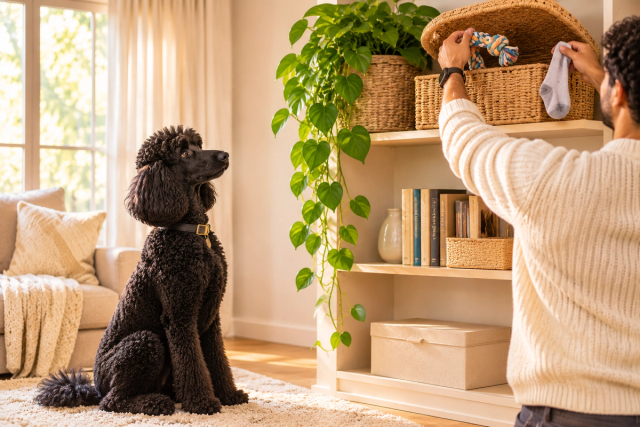
Some dogs make a habit of swallowing things that aren't food, even after a scare.
Pick up dirty laundry, socks, underwear, and hair ties, and keep them in a closed hamper. Choose toys that are the right size for your dog and that hold up to chewing, and throw out anything that's coming apart. Supervise play with stuffed toys, balls, and chew items, and put them away when you leave the room if your dog is a swallower.
Keep bones, corn cobs, rocks, and trash out of reach. A lidded can and a quick sweep of the floor after kids' playtime prevent a lot of late-night drives.
If your dog has already had one blockage, ask your veterinarian about prevention. Some dogs need extra supervision, and in repeated cases a veterinarian may discuss options such as basket-muzzle training when they can't be watched.
How can PawMD help?
When something goes missing and you're trying to remember your dog's weight, usual eating habits, or past surgeries, details can be hard to pull together in a hurry. The PawMD app keeps your pet's profile and records in one place so you have them when you call your veterinarian. PawMD also connects you with licensed veterinarians by chat, phone, or video. A possible blockage is not something to wait out at home, and the app doesn't replace an exam or emergency care.
Frequently Asked Questions
What if my dog seems fine after swallowing a sock?
Call your veterinarian anyway. Some dogs look normal at first, and it can be easier to remove an object while it's still in the stomach. Don't wait for vomiting to decide whether the call is necessary.
Can a sock or toy pass on its own?
Sometimes a small, smooth object will pass, but many won't, and you can't tell from home which way it will go. Your veterinarian may recommend monitoring with imaging, or they may need to retrieve it. That's their call, not a home experiment.
Should I make my dog throw up the sock or toy?
Not unless a veterinarian tells you to. Some objects can cause more harm coming back up, and home methods can be dangerous.
How long can a dog live with a blockage?
There isn't a safe waiting period. A complete blockage can make a dog seriously ill in a short time. If you think your dog swallowed something or they're showing signs, call or go in now rather than watching the clock.
What if I didn't see my dog swallow anything, but a toy is missing?
Call and tell your veterinarian what's missing and how your dog is acting. A missing toy plus vomiting, a poor appetite, or pain is especially important to mention. Even without signs, it's worth asking, especially if the missing item is a sock, a piece of a toy, a bone, or a corn cob.
Can cats get a blockage too?
Yes. Cats are especially likely to swallow string, tinsel, ribbon, or yarn, which can cause a serious linear blockage. If you think your cat swallowed something stringy, call your veterinarian right away.
The Bottom Line
If your dog swallowed a sock, a toy, or another object, don't wait to see whether it "just passes." Call your veterinarian, skip the home remedies, and get help early, while there are still more ways to fix the problem.
The best ending to a sock scare is a phone call made sooner than you think you need it.
Related reading: When to Take Your Pet to the Emergency Vet · Vomiting or Diarrhea in Dogs and Cats: What to Do and When to Worry · Which Human Medications Are Poisonous to Pets? · What Are the Winter Holiday Hazards for Pets?
Sources
Dogs · Cats · Emergency · First Aid · Pet Safety
Related articles
- What Are the Winter Holiday Hazards for Pets?
First Aid & Emergencies
- When to Take Your Pet to the Emergency Vet
First Aid & Emergencies
- Vomiting or Diarrhea in Dogs and Cats: What to Do and When to Worry
First Aid & Emergencies
This article is for general information and is not a substitute for veterinary advice. Contact a veterinarian if your pet is in distress or you are unsure what to do next.