My Dog Ate Rat Poison: What Do I Do?
PawMD
November 24, 2026
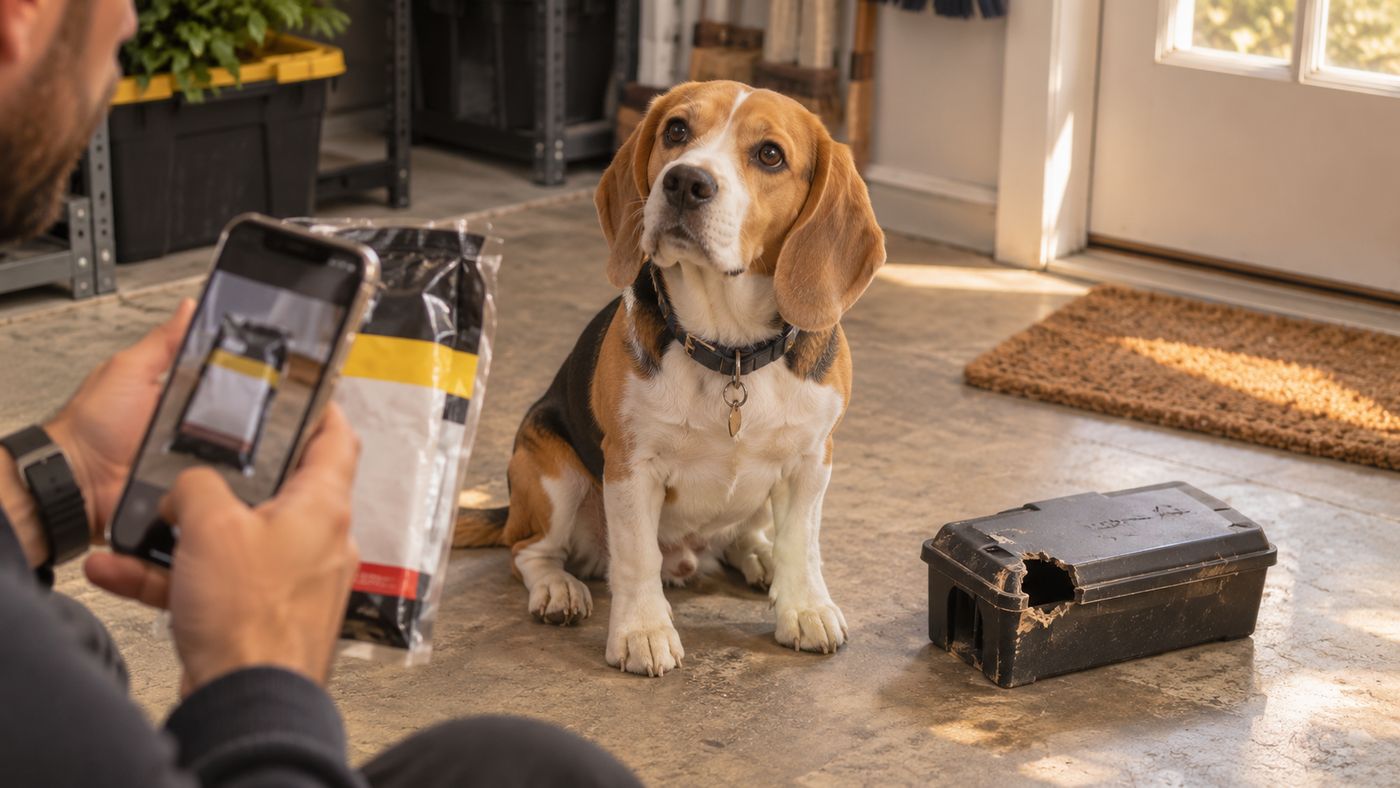
There's a chewed plastic bait station in the garage, and a few pellets are missing. Your dog is already trotting back toward the house as if nothing happened.
First, the most important part: call your veterinarian or an emergency vet now, even if your dog seems completely fine. Grab the package if you can. The type of poison matters more than the color of the bait, and some kinds don't cause obvious signs for days. You can also use ToxCheck, PawMD's toxicity calculator, to check whether the amount is likely a concern for their size. It's not a diagnosis, so use it alongside that call, not instead of it. Don't try to make your dog vomit unless a veterinarian or poison expert tells you to.
Cats get into rodent bait less often than dogs do, but the same advice applies: call right away, and bring the package.
Why does the type of rat poison matter?
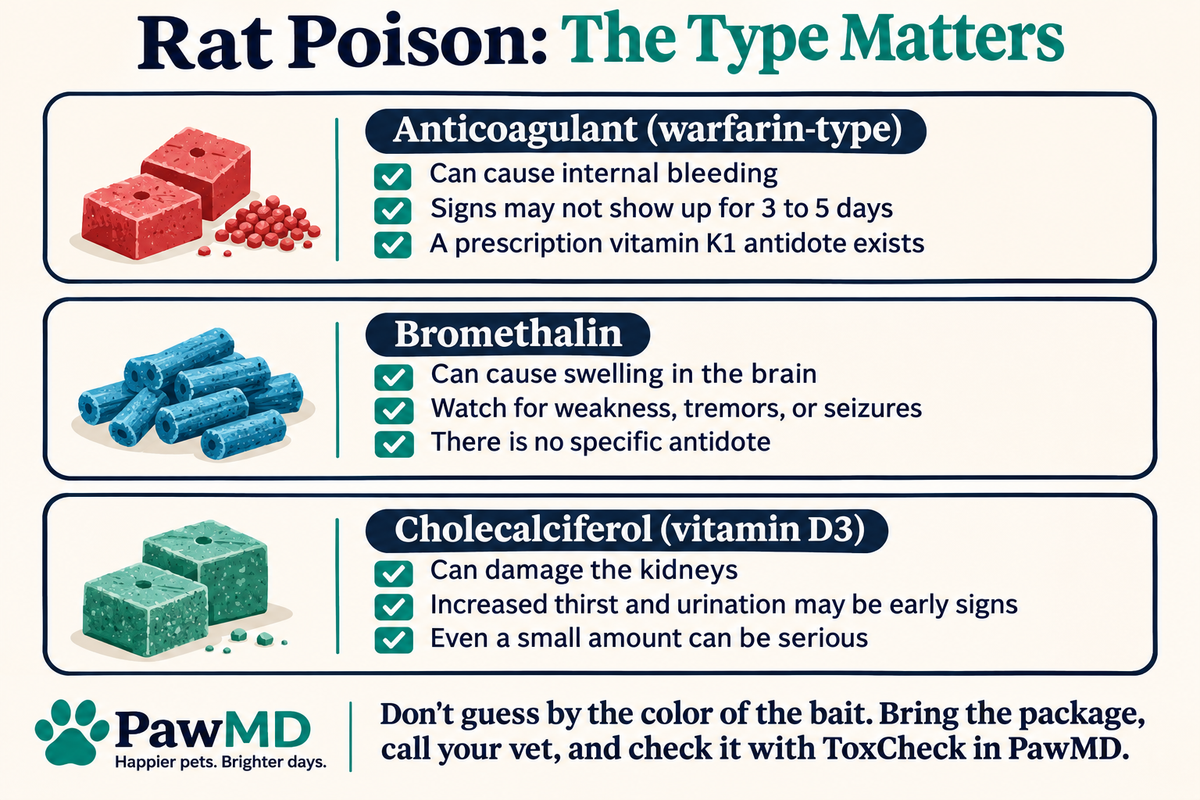
Mouse and rat poisons, also called rodenticides, are not all the same. Products that look alike, and even ones with similar names, can contain very different active ingredients. You can't tell the type from the color or shape of the pellets. The label, or the EPA registration number on the package, is what helps a veterinarian or poison-control service figure out the risk and the next step.
These are the kinds that come up most often:
Anticoagulant baits stop the blood from clotting and can lead to internal bleeding. Signs often don't appear for three to five days, which is why a dog who looks normal tonight is not necessarily in the clear. This is the type that has a specific antidote, prescription vitamin K1. Over-the-counter vitamin K supplements and foods high in vitamin K are not a substitute.
Bromethalin can cause swelling in the brain. Depending on how much was eaten, signs can include weakness, wobbliness, tremors, or seizures. They may show up within a few hours or be delayed. There is no specific antidote, and cats can be more sensitive than dogs.
Cholecalciferol, or vitamin D3, can raise calcium levels in the body and damage the kidneys. Even a small amount can be serious. Early signs may include drinking and peeing more than usual, a poor appetite, weakness, or lethargy.
Zinc phosphide is more often found in mole or gopher baits, but it can appear in mouse and rat products too. In the stomach it can release phosphine gas, which is irritating and can also be dangerous for people if a pet vomits. If you know or suspect this is the product, say so when you call, and don't feed your dog in the meantime. If they vomit in the car, open the windows.
Some baits use other ingredients, including corn gluten, that are usually less dangerous to pets but can still upset the stomach or, in large amounts, cause a blockage. Don't assume a brown pellet is the milder kind. If you're not sure what it was, still call. Treatment is still possible even when the package is missing.
What should I do right now?
Take a breath. Looking this up was already the right move. Now let's keep things moving.
Get your pet away from the bait
Move your dog or cat away from any leftover pellets or blocks, and check whether another pet helped themselves. If you can do it safely, put the remaining bait where no one can reach it.
Find the package
The original box, bag, or a photo of the label is one of the most useful things you can have in hand. Try to piece together:
- The product name and active ingredient
- The EPA registration number, if you see it
- Roughly how much is missing (if you're not sure, assume the most it could be)
- About when it was eaten
- Your pet's approximate weight
- Whether more than one pet may have been involved
If you placed the bait yourself, think about how much you put down and whether any is missing from that spot.
Call a veterinarian, and don't wait for symptoms
Don't wait to see whether your pet looks sick. Call your veterinarian or the nearest emergency veterinary hospital. You can run the amount through ToxCheck while you make that call.
If you can't reach a veterinarian, an animal poison-control service can help:
- ASPCA Animal Poison Control Center: (888) 426-4435
- Pet Poison Helpline: (855) 764-7661
These services may charge a consultation fee. In return, they can look at the product and your pet's size and help you decide whether it's reasonable to monitor at home or whether your pet needs to be seen.
Hold off on making your pet vomit
It's natural to want the bait out as fast as possible. Please skip home remedies unless a veterinarian or poison expert specifically tells you to and walks you through it.
With some baits, especially zinc phosphide mole or gopher products, vomiting can release a gas that is also hazardous to people. If that might be the product, vomiting is best handled by veterinary staff in a well-ventilated area.
What are the signs of rat poison in dogs and cats?
It depends on the ingredient, and signs can be delayed. That's why the package matters, and why "he seems fine" is not the end of the story.
With anticoagulant baits, you might later notice lethargy, weakness, pale gums, coughing, trouble breathing, bruising, nosebleeds, blood in the urine or stool, or a dog who doesn't want to exercise. Those signs may not show up for several days.
With bromethalin, watch for wobbliness, weakness, tremors, seizures, or a pet who seems mentally off.
With cholecalciferol, early changes can include increased thirst and urination, a poor appetite, vomiting, or lethargy, followed by more serious kidney problems.
With zinc phosphide, vomiting, abdominal pain, restlessness, or more serious signs such as difficulty breathing or seizures can appear relatively quickly.
If your pet is having trouble breathing, collapsing, having a seizure, bleeding you can't stop, or otherwise looks critically ill, go to an emergency clinic. See When to Take Your Pet to the Emergency Vet.
None of these lists is a diagnosis. A veterinarian will put the product, the amount, your pet's size, and any signs together and decide what comes next. That might include decontamination, bloodwork, hospitalization, or, for some anticoagulant baits, a course of prescription vitamin K1 that can last several weeks.
What if my pet ate a poisoned mouse or rat?
Pets can also be poisoned by eating a rodent that has already eaten bait. This is sometimes called secondary or relay poisoning.
If you know or suspect that happened, call your veterinarian and tell them. Bring any packaging you still have from bait used in the house, garage, or yard. Don't wait to see whether signs appear.
How can I prevent this from happening again?
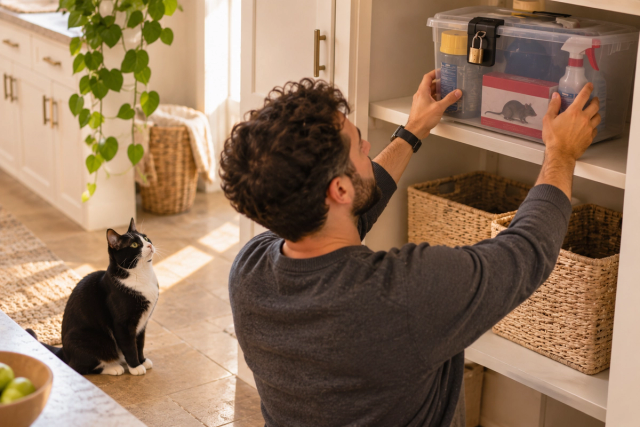
If you need to use rodent bait, assume a curious dog will find it. Cats can find it too.
Keep unused product in a locked cabinet, not on a garage floor or under the sink. If bait is placed in the house, garage, shed, or yard, use a station your pet cannot break into, put it where they cannot reach it, and write down what you used, how much, and where. Check those spots regularly to see whether any bait has been moved or chewed.
Consider pet-safe rodent control methods, and talk with your veterinarian if you're not sure how to keep both pests and pets in mind.
Human medications, antifreeze, and holiday foods are also easier for pets to reach when the house is busy. For seasonal hazards around the house, see What Are the Winter Holiday Hazards for Pets?.
How can PawMD help?
When bait goes missing, details like your pet's weight and the product name can be hard to remember in a hurry. The PawMD app keeps your pet's profile and records in one place, including ToxCheck, so you can estimate whether the amount is likely a concern for their size while you call your veterinarian. It's not a diagnosis, and it doesn't replace that call. PawMD also connects you with licensed veterinarians by chat, phone, or video.
Frequently Asked Questions
What if my dog seems fine after eating rat poison?
Call your veterinarian anyway. Some baits, especially anticoagulants, can take several days to cause visible signs. Waiting can make treatment harder.
Can I tell what kind of poison it is by the color of the bait?
No. Different products come in similar colors and shapes. Use the package or the EPA registration number, and if you don't have either, still call.
Is there an antidote for rat poison?
It depends on the type. Anticoagulant baits have a specific antidote, prescription vitamin K1. Other common types do not have a specific antidote, but prompt veterinary care can still make a real difference. Don't give over-the-counter vitamin K or "vitamin-rich" foods and assume that's enough.
What if I don't have the package anymore?
Call anyway. Treatment is still possible. Share whatever you remember about where the bait came from, what it looked like, and how much might be missing.
Should I make my dog throw up?
Not unless a veterinarian or poison expert tells you to. Some products can release a gas when a pet vomits, and home methods can cause harm.
Can cats be poisoned by rat bait too?
Yes. Cats get into bait less often than dogs, but some types, including bromethalin, can be especially concerning for them. Call if you think your cat ate bait or a poisoned rodent.
The Bottom Line
If your dog or cat ate rat poison, the next step is a phone call, not a waiting game. Bring the package if you have it, skip the home remedies, and let a veterinarian tell you whether your pet needs to be seen.
The quietest night after a bait scare is the one where you called early.
Related reading: When to Take Your Pet to the Emergency Vet · What Are the Winter Holiday Hazards for Pets? · My Dog Ate Chocolate: What Do I Do?
Sources
Dogs · Cats · Toxins · Emergency · First Aid · Pet Safety
Related articles
- Which Human Medications Are Poisonous to Pets?
Food, Nutrition & Toxins
- What Can Dogs Eat on Thanksgiving?
Food, Nutrition & Toxins
- My Dog Ate Chocolate: What Do I Do?
Food, Nutrition & Toxins
This article is for general information and is not a substitute for veterinary advice. Contact a veterinarian if your pet is in distress or you are unsure what to do next.