My Dog Ate Chocolate: What Do I Do?
PawMD
October 23, 2026
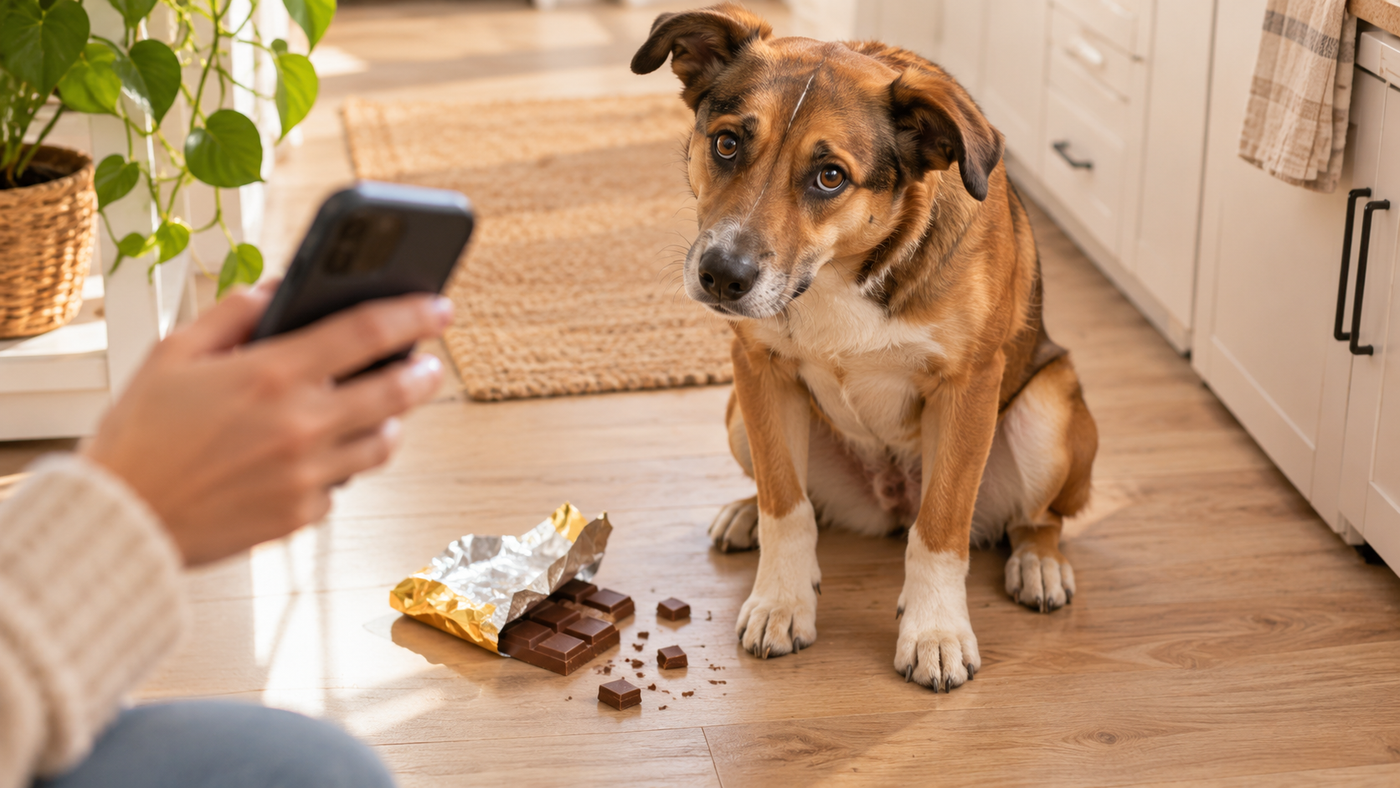
There's a shredded wrapper on the living room rug, a smear of brown on the couch cushion, and a dog who suddenly won't quite meet your eyes.
First, the most important part: call your veterinarian or an emergency vet now, even if your dog seems completely fine. Have the wrapper handy, along with your best guess at how much is missing, when it happened, and roughly what your dog weighs. You can also use ToxCheck, PawMD's toxicity calculator, to check whether the amount your dog ate is likely a concern for their size and get the details together for next steps. It's not a diagnosis, so use it alongside that call, not instead of it. And don't try to make your dog vomit unless a professional tells you to.
Darker chocolate, smaller dogs, and bigger amounts are the biggest worries. Because signs can take hours to show up, a dog who looks normal right now isn't necessarily in the clear.
Sometimes a stolen bite of chocolate ends with nothing worse than an upset stomach. Other times it leads to a racing heart, tremors, or seizures, and you can't always tell which one you're dealing with just by looking. So let's walk through what to do in the next few minutes, who to call, and which signs mean it's time to head in.
Does the type of chocolate matter?
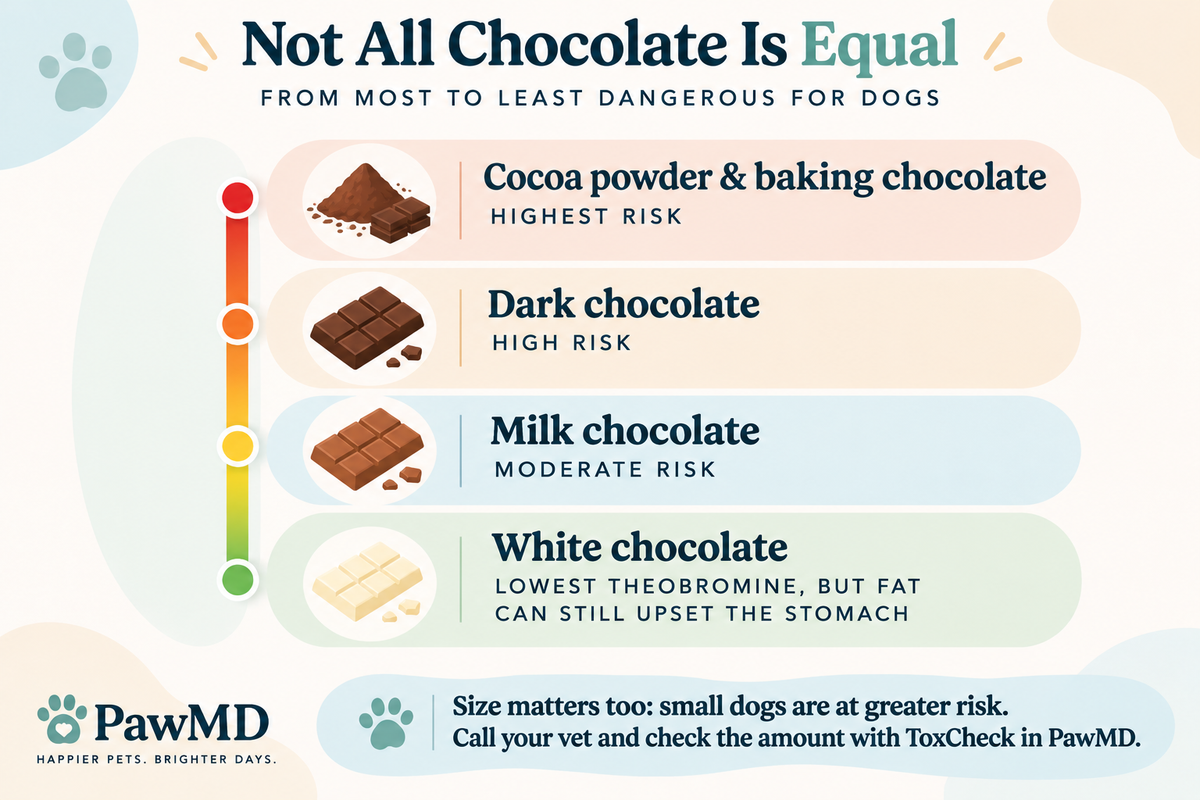
Quite a lot, actually.
As a rule, the darker and more bitter the chocolate, the more theobromine it contains. That's the stimulant that does most of the damage. Unsweetened baking chocolate and cocoa powder are the most concerning, followed by dark and semisweet chocolate, then milk chocolate, then chocolate-flavored cakes and cookies. White chocolate has very little theobromine, though it's still high in fat.
Even within one type, the amount varies by brand and recipe, and your dog's size changes the picture too. A nibble that might give a Labrador a mild stomachache can be a much bigger deal for a Chihuahua.
Veterinary teams and poison-control services put all of this together (your dog's weight, the kind of chocolate, and how much is gone) to estimate the risk. ToxCheck can give you a quick estimate for your dog's size, but please don't do the math in your head and decide it's probably fine. Let your veterinarian make the call.
What should I do right now?
Take a breath. Looking this up was already the right move. Now let's keep things moving.
Get the rest of it out of reach
Move your dog away from any leftover chocolate and wrappers, and check whether any other pets helped themselves.
Figure out what they ate and how much
If you can find the wrapper or package, grab it. It's one of the most useful things you can have in hand when you call. Try to piece together:
- The type of chocolate (milk, dark, baking, cocoa powder, or a baked good)
- The cocoa percentage on the label, if there is one
- Roughly how much is missing (if you're not sure, assume the most it could be)
- About when your dog ate it
- Your dog's approximate weight
- Anything else in the treat, like raisins, nuts, or sugar-free sweeteners
That last one is easy to overlook. Some chocolate products and baked goods contain other ingredients that can be dangerous to pets, such as raisins or xylitol, a sugar substitute, so read the whole ingredient list to whoever you talk to.
Call a veterinarian or a pet poison hotline
Don't wait to see whether symptoms appear. Call your veterinarian or the nearest emergency veterinary hospital. If you can't reach either, an animal poison-control service can help:
- ASPCA Animal Poison Control Center: (888) 426-4435
- Pet Poison Helpline: (855) 764-7661
These services may charge a consultation fee. In return, they'll look at your dog's weight and what was eaten and tell you whether it's reasonable to keep an eye on things at home or whether your dog needs to be seen.
Hold off on making your dog vomit
It's natural to want the chocolate out as fast as possible, and a quick search will turn up plenty of home methods. Please skip them unless a veterinarian or poison expert specifically tells you to and walks you through it.
Salt, mustard, or a finger down the throat can cause real harm. Even when vomiting is the right call, many veterinarians prefer to do it in the clinic, where they can use medication that works more reliably and safely. The sooner they hear from you, the more options they usually have.
What are the signs of chocolate poisoning in dogs?
Early on, you might notice vomiting, diarrhea, a sore or bloated belly, extra drinking, or a dog who seems restless and on edge.
As things progress, signs can include:
- Hyperactivity, pacing, or trouble settling
- Panting
- Peeing more than usual
- Twitching or tremors
- Stumbling, wobbliness, or stiffness
- A racing or irregular heartbeat
- Seizures
These signs are described by the Merck Veterinary Manual. If you see any of them after your dog has eaten chocolate, have your dog seen promptly.
When is it an emergency?
Head to a veterinarian or emergency hospital right away if your dog:
- Ate baking chocolate, cocoa powder, or a large amount of dark chocolate
- Is small, a puppy, a senior, or has a heart condition or other medical problem
- Is vomiting again and again
- Seems very restless or agitated, or can't settle
- Is panting heavily or has a racing heart
- Is trembling, stumbling, or stiff
- Has a seizure or collapses
- Ate a treat that also contained xylitol or raisins
If you're unsure, treat it as urgent. A phone call that turns out to be unnecessary costs far less than waiting too long.
What might the veterinarian do?
That depends on what your dog ate, how much, how long ago, and how they're doing when they arrive.
Your veterinarian will likely start with a physical exam, checking your dog's heart rate and rhythm, temperature, and hydration. If the chocolate was eaten recently, they may induce vomiting to get it out of the stomach, and they may give activated charcoal to help keep more from being absorbed. Getting chocolate out early can often turn a potentially serious case into a much milder one.
If your dog is already showing signs, care may include IV fluids, medications to control vomiting, tremors, or heart rhythm, and close monitoring until the effects wear off. Because theobromine lingers, some dogs need to stay in the hospital for observation, while others go home the same day. Your veterinarian will help you figure out which makes sense.
Why is chocolate dangerous for dogs?
Chocolate contains two stimulants, theobromine and caffeine, from a family of compounds called methylxanthines. People break them down fairly quickly. Dogs don't, so these stimulants linger in the body and can affect the stomach, the heart, and the nervous system.
It's a bit like a strong cup of coffee that keeps working long after the cup is empty, except your dog never chose to drink it.
According to the Merck Veterinary Manual, signs usually appear within 6–12 hours of eating chocolate, and in severe cases they can last up to 72 hours.
Then there's the fat. Candy bars, cake, and brownies are rich, and a sudden high-fat binge can upset the stomach and, in some dogs, trigger pancreatitis, a painful inflammation of the pancreas. That risk applies even to white chocolate, which has very little theobromine.
Cats are sensitive to the same compounds, though they rarely show much interest in chocolate. If your cat did get into some, the advice is the same: call.
How can I prevent the next chocolate scare?

Dogs have a remarkable talent for finding chocolate, so the goal is simply to make it harder.
Keep chocolate, baked goods, and cocoa powder in closed cabinets rather than on counters or coffee tables. Keep an eye on purses, backpacks, and coat pockets, especially when guests are over. Halloween, Valentine's Day, Easter, and the winter holidays deserve extra caution, and it helps to remind kids that candy isn't for sharing with the dog. If your dog likes to chew things in the yard, skip cocoa bean mulch.
How can I have the facts ready next time?
When you're worried, even simple details like your dog's weight or current medications can be surprisingly hard to remember. Having them in one place makes the call faster.
In the PawMD app, your pet's profile and records vault keep their weight, medications, and vaccine history close at hand. That's also where ToxCheck lives, so you can run a quick estimate for your dog's size the moment something goes missing, while you call your veterinarian. If something might be toxic, call a veterinarian or poison control.
If you're unsure and want to talk it through, PawMD also connects you with licensed veterinarians by chat, phone, or video. You can message them from the app, and they'll be able to help you out and give you the guidance you need.
For anything that looks like an emergency, such as tremors, seizures, collapse, or a racing heart, go straight to an emergency veterinary hospital.
Frequently Asked Questions
How much chocolate is toxic to a dog?
There isn't one number that fits every dog. It depends on the type of chocolate, how much was eaten, and how much your dog weighs. A little milk chocolate is usually less concerning than the same amount of dark or baking chocolate, but a veterinarian or poison-control expert is the right person to estimate the risk for your dog.
My dog ate chocolate but seems fine. Can I just watch them?
It's worth a call first. Signs can take 6–12 hours to show up, and treatment works best early. Your veterinarian or a poison hotline may well tell you that watching at home is fine, but let them make that call.
How long after eating chocolate will my dog show symptoms?
Usually within 6 hours. In severe cases, the effects can last up to about three days.
Should I make my dog throw up after eating chocolate?
Only if a veterinarian or poison-control expert tells you to and explains how. Home methods like salt or mustard can be dangerous, and in many cases your veterinarian will prefer to induce vomiting in the clinic.
Is white chocolate safe for dogs?
Not really. It contains very little theobromine, but it's high in fat and sugar, which can upset your dog's stomach and, in some dogs, may contribute to pancreatitis.
What if my dog ate a chocolate chip cookie or brownie?
Take a look at the ingredients. Baked goods usually contain less chocolate than a candy bar, but brownies can be rich in dark chocolate or cocoa, and some recipes include raisins, nuts, or xylitol. Have the recipe or label handy when you call.
Is chocolate dangerous for cats too?
Yes. Cats are sensitive to the same compounds, even though they rarely eat chocolate. If your cat did, call your veterinarian or a pet poison hotline.
The Bottom Line
If your dog ate chocolate, don't wait for symptoms to make the decision for you.
Grab the wrapper, note what kind of chocolate it was, how much is gone, and when it happened, then call your veterinarian or a pet poison hotline. Skip the home remedies, and don't try to make your dog vomit unless an expert tells you to.
Dark chocolate, small dogs, and large amounts are the biggest concerns, but only a professional can tell you whether your dog's situation is safe to watch at home.
A five-minute phone call is the easiest way to keep a stolen treat from turning into an emergency.
Related reading: Vomiting or Diarrhea in Dogs and Cats: What to Do and When to Worry · Should I Feed My Dog or Cat a Raw or Home-Cooked Diet?
Sources:
Dogs · Cats · Toxins · Chocolate · Emergency · Holidays
Related articles
- What Can Dogs Eat on Thanksgiving?
Food, Nutrition & Toxins
- My Dog Ate Rat Poison: What Do I Do?
Food, Nutrition & Toxins
- Which Human Medications Are Poisonous to Pets?
Food, Nutrition & Toxins
This article is for general information and is not a substitute for veterinary advice. Contact a veterinarian if your pet is in distress or you are unsure what to do next.